While AI Is Strengthening FDA Regulatory Processes, Humans Remain Squarely in the Loop
A generic drug application has to be checked against a reference product, a manufacturing record, and a regulatory standard. For an industry that fills about nine of every ten U.S. prescriptions, speed of review determines when patients get a lower-cost option. But while increased AI capabilities present the promise of efficiency in analyzing and synthesizing data, that efficiency can’t come at the expense of rigor, quality, and patient safety.
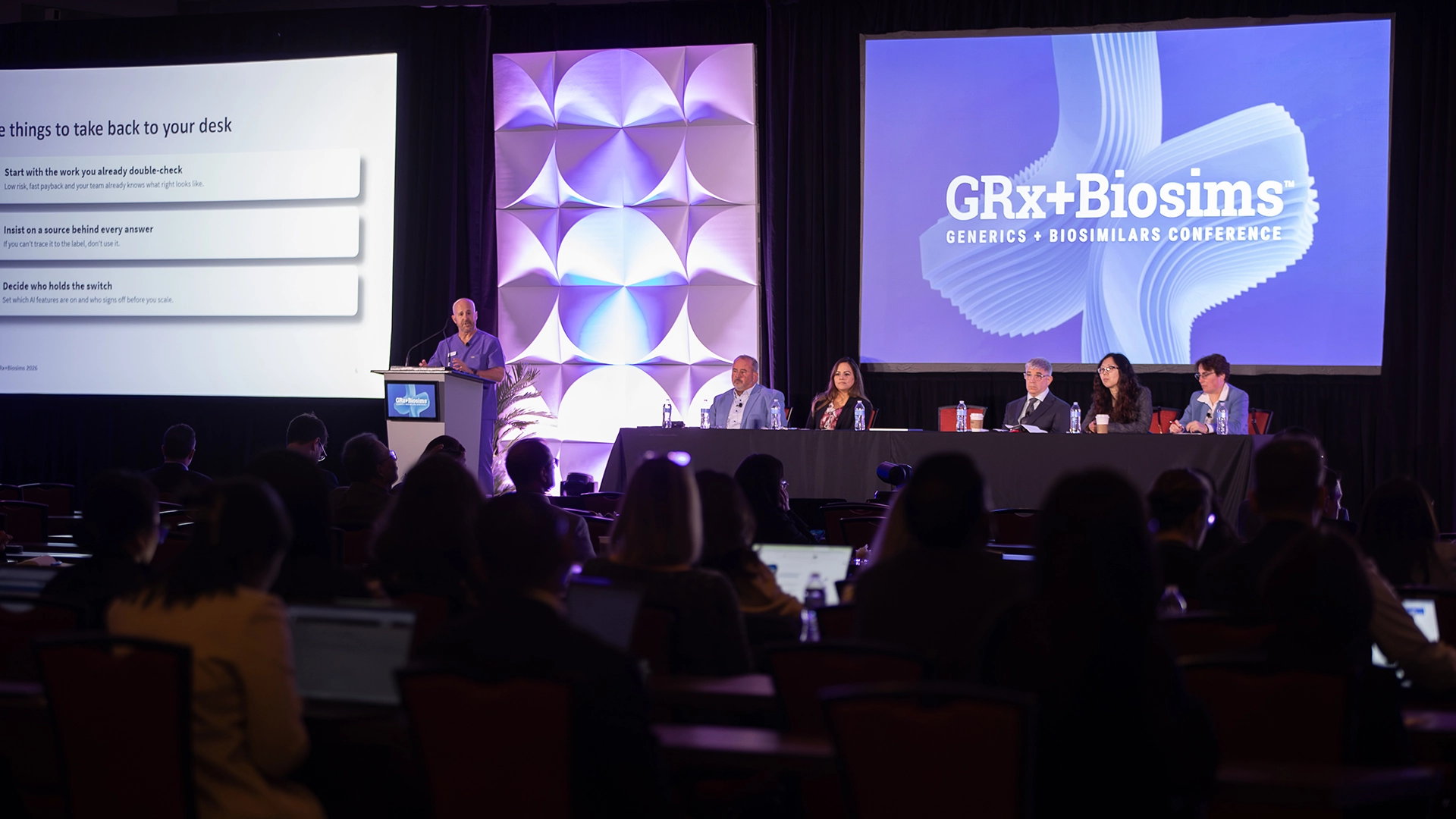
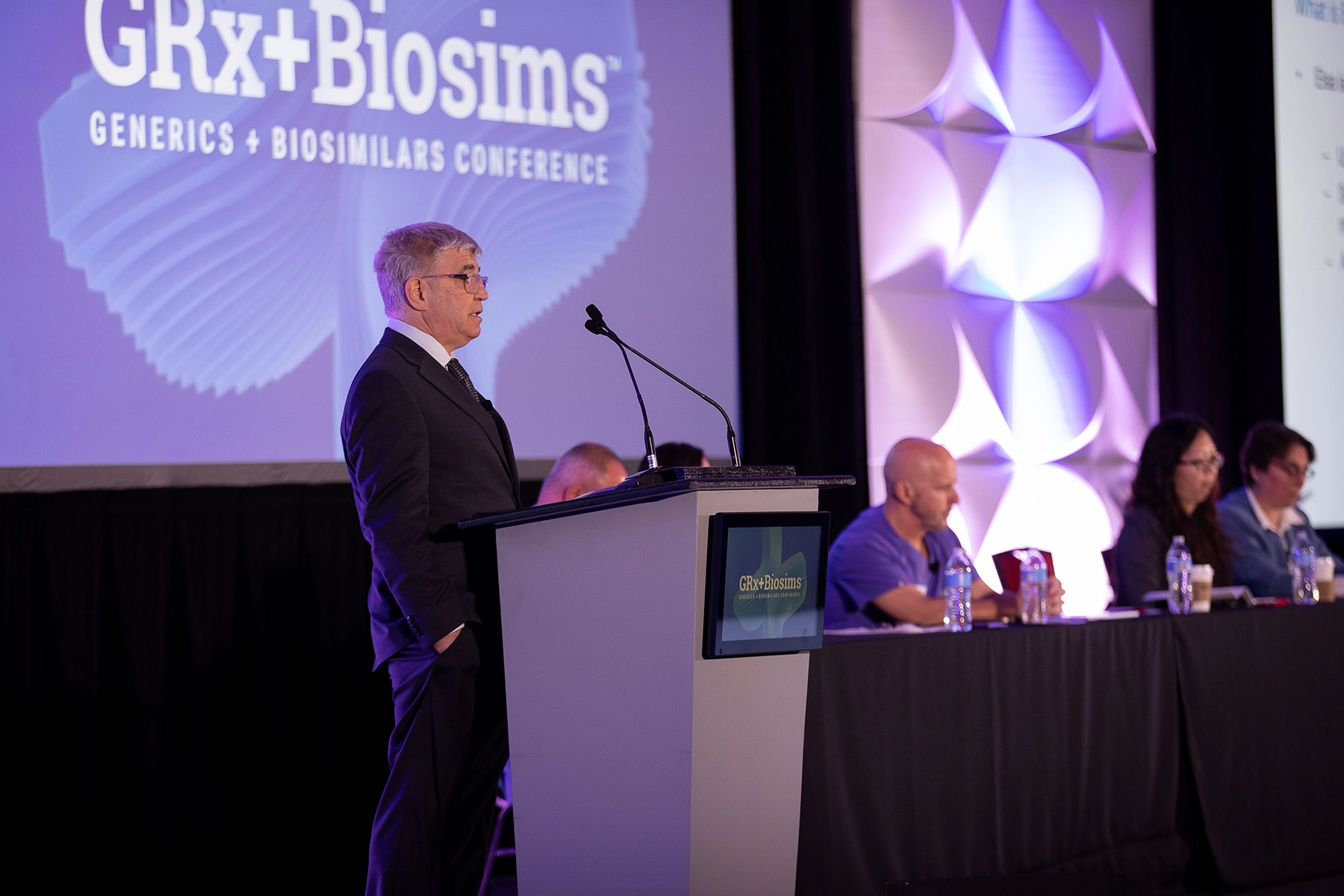
That was the backdrop for Monday’s well-attended learning track on AI and automation moderated by Biocon Biologics’ Craig Kiester on the first day of GRx+Biosims 2026. Three FDA offices and two industry leaders delivered the same message: AI can do the reading and analysis, but people make the decisions and humans remain accountable.
Industry wants rules that scale with risk. Teva’s Nimi Chhina said the goal is to “enable innovation without lowering the evidentiary bar.” She outlined three priorities. Don’t over-regulate early, exploratory uses such as formulation work; validation and documentation expectations should rise as AI output gets closer to a regulatory decision. Clarify how AI policy applies to generics and biosimilars, whose development is tied to reference product information. And FDA should be transparent about where AI supports its reviews, what controls apply, and how to structure submissions that machines can read. Useful AI, Chhina proposed, is “validated, traceable and accountable.”
AI reads the labels. People decide. David Pennington, CEO of Dr. Evidence, the session’s sponsor, focused on labeling: tracking label changes, monitoring reference products, and comparing U.S. and EU labels section by section. He noted that “the label is the last thing standing between a product and a person taking it.” AI takes the first pass, with search, side-by-side comparison, change summaries, and first drafts. Experts judge and approve. His four guardrails: every answer traces to its exact source; AI is switched on account by account; nothing reaches a submission without expert sign-off; and AI informs decisions but does not make them. Carve-outs, he said, remain a regulatory and legal call for people. His advice: start with work your team already double-checks, and “if you can’t trace it to the label, don’t use it.”
Inside FDA, Elsa is becoming routine. Andre Raw of the Office of Pharmaceutical Quality said Elsa 4.0, released in May 2026, now connects to HALO, which consolidates more than 40 FDA submission data systems. The data stays in a secure government cloud and is never used to train the model. Raw’s team built an Elsa tool around Four-Part Harmony (MAPP 5016.8), FDA’s rule that every quality communication states what was provided, what the issue is, what is needed, and why. The tool rates each draft information request from one to four stars, fills gaps with minimal changes, and shows its edits as tracked changes. Reviewers must check everything, because “hallucination is a real risk,” Raw’s slides warned.
Tao Bai of the Office of Bioequivalence in FDA’s Office of Generic Drugs reported that between staff surveys in February and September (91 respondents each), regular Elsa use in the office rose from 33.0 percent to 47.8 percent, and daily use grew more than fivefold, from 4.4 percent to 23.2 percent. The office is building NEXBE, a set of AI agents for knowledge retrieval, data processing, data monitoring, prescreening, and bioequivalence review, each validated with human reviewers before and after deployment. Bai’s caution: AI is only as reliable as its data. Under GDUFA IV, FDA will provide standard tables and formats, with training, for bioequivalence study summaries, bioequivalence site information, drug substance and impurity structures, and individual-subject PK data, and industry will aspire to use them.
Cristina Ausin of the FDA Office of Therapeutic Biologics and Biosimilars said AI can pull application details into reviews, summarize meeting agreements, and tabulate submitted studies. In comparative analytical assessments, it can compile the quality attributes and methods an applicant used and check them against FDA’s earlier advice, leaving more time for the science. Her slides were blunt: AI “does not replace FDA staff or reviewers,” its use is optional, and its outputs are “not 100% reliable.”
Audience questions probed AI’s role in deficiencies. Attendees asked whether companies will know when AI shaped a deficiency. FDA panelists said deficiencies are never issued automatically: the tool is a more sophisticated spell checker, and the reviewer decides what goes out. An industry-facing AI tool for regulatory questions has been considered but needs careful planning to avoid wrong answers. Deficiency letters are public, panelists noted, so companies can already use AI to pre-screen submissions, and FDA’s bioequivalence office is building a prescreening agent of its own. For analytical similarity in complex biosimilars, scientific judgment stays with people. On measuring impact, FDA is still defining metrics, and panelists suggested consistency may arrive before speed.
Why it all matters for patients. Generics and biosimilars saved the U.S. healthcare system $496 billion in 2025, and every month a lower-cost alternative waits to enter the market is a month patients pay more. Earlier Monday, OGD Acting Director Darby Kozak said more than 60 percent of ANDAs need more than two review cycles. AI will not lower the bar for approval. With the guardrails this panel described, it can help both sides spend less time on paperwork and more on the questions that matter.
Stay with AAM throughout GRx+Biosims 2026 for more from Rockville, MD; and look for details on GRx+Biosims 2027 soon, at grxbiosims.org.