
Contributed by AAM President & CEO, John Murphy III, for PharmaBoardroom (September 29, 2026)
With the release of our 2026 US Generic and Biosimilar Medicines Savings Report in September 2026, there’s no denying that generics and biosimilars are one of the greatest success stories across the entire US healthcare ecosystem. But now our job at AAM, alongside our Biosimilars Council, is to keep that success story alive. This has increasingly become a more arduous task – because the very forces that make generic and biosimilar medicines so affordable are currently destabilizing the market. Without intervention, there is a risk of supply chain disruptions, including drug shortages, and even regionally-specific market exits.
Generic medications are the only part of the US healthcare system faced with annual deflation, which has averaged 7.7 percent in the last 5 years. For comparison, overall medical inflation was an average of 6.2 percent during that same period – nearly a 14 percentage point difference. Since 2019, the value of generic sales has declined by USD 6.4 billion, even as volumes and launches increased. In 2016, generics represented 27 percent of prescription spending; today, they represent just 12 percent. Thirty years ago, generic prices stabilized at roughly one-third of brand costs. Today they bottom out at barely one-fifth. This is structural deflation, a silent but powerful force eroding the sustainability of the system. When paired with medical inflation, this erosive gap could mimic a catastrophic tidal wave – capable of washing the entire generic and biosimilar medicines industry away and drowning America’s patients in its path.
In 2025 generics and biosimilars infused USD 496 billion of savings into the US healthcare system. At the same time, our industry filled nearly 90 percent of all prescriptions in America at under 12 percent of total US prescription costs. This said, generic and biosimilar medicines are not merely a vehicle for savings. Our industry is a public-health engine that keeps America moving forward by infusing strength and stability into communities. That strength and stability allows for greater productivity and economic resiliency – because when Americans feel well, they can work and live well, too.
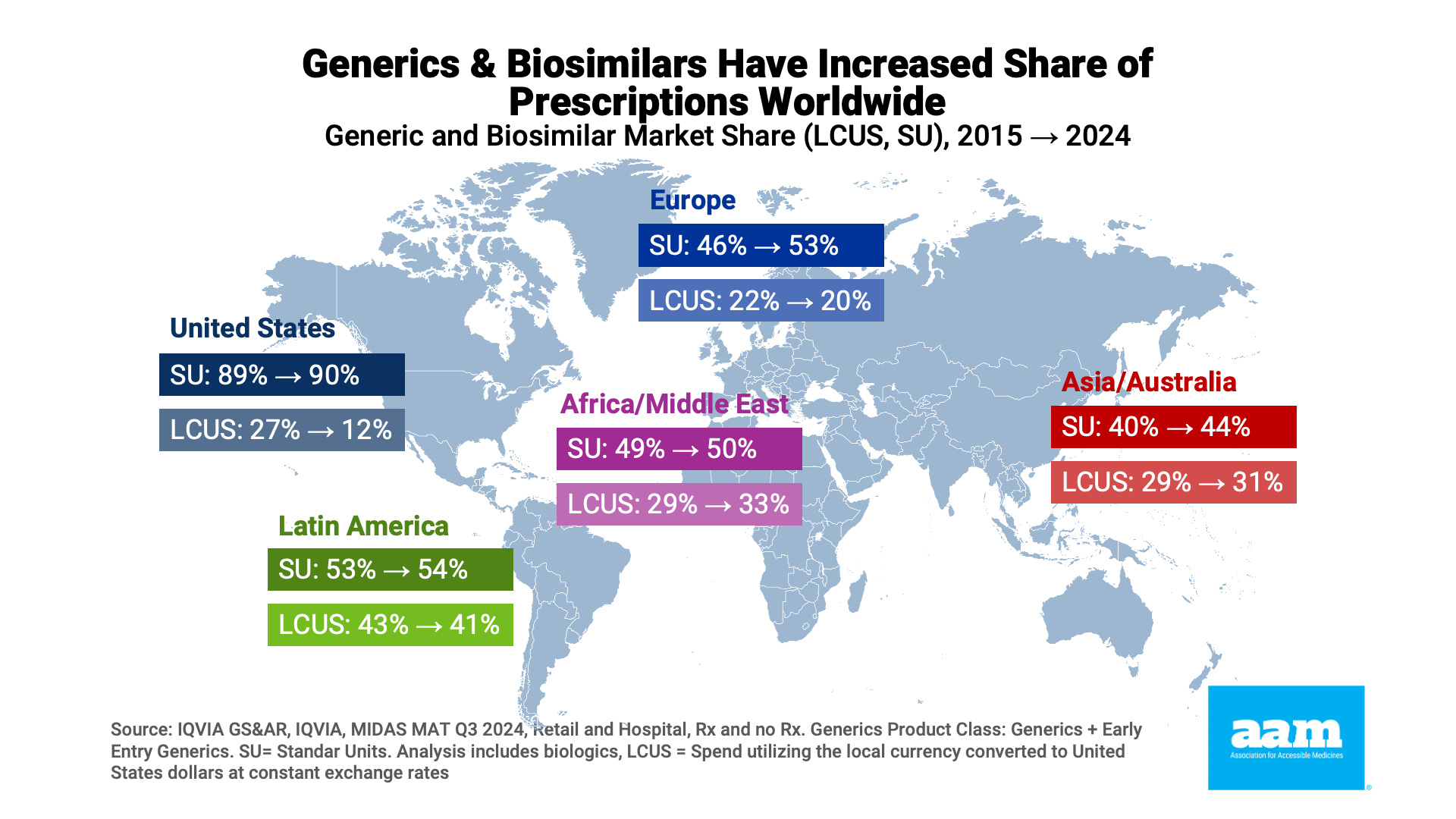
On the international front, with data from the IQVIA Institute, our 2026 Savings Report revealed substantially more generics filled at substantially lower costs in America, compared to other regions. But across the globe, the overall share of the prescription drug market has increased for generics and biosimilars. Unfortunately, while the overall share of the market has increased, the amount of spending on those same products within certain regions has tended to decrease. And other areas of the world did not show such dramatic price deflation as the US; this is concerning.
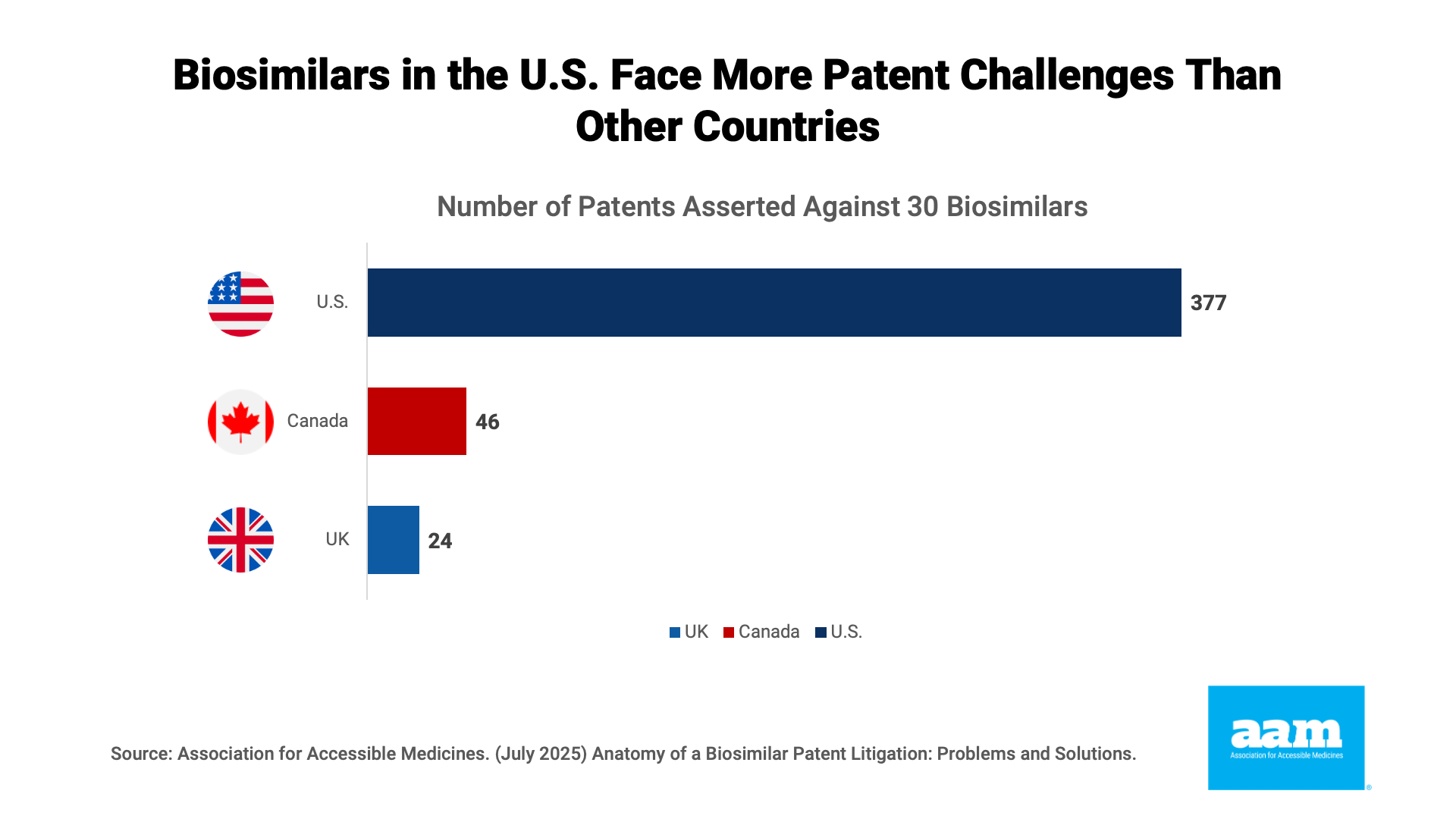
Our report also showed the US is being held back by an unprecedented volume of patent litigation. In the biosimilars space alone, we often see more than 10 times the number of patents asserted on products in the US, than in countries like Canada and the UK. This creates market-entry delays that directly restrict patient access. This complex litigation – coined as patent thickets – delays patient access to lower-cost products. As a result, patients and taxpayers pay more for their medicines for a longer duration of time. Clearly, we need to limit the number of patents brand-drug manufacturers can assert and prioritize preventing anticompetitive practices that delay patient access to lower-cost medicines.
While prices for brand drugs continue to climb along with their monopolies over patient access in many complex therapeutic areas, the total amount Americans spent on generic and biosimilar medicines in 2025 adds up to only 1.1 percent of all healthcare spending. We know generic and biosimilar medicines are indispensable – USD 3.6 trillion in savings in the past decade alone underscores this point. Unfortunately, I also know the market that sustains our industry is in peril. But there is a fix – provided that generics and biosimilars are treated in the legal, policy and regulatory spheres as a distinct market from their brand and biologic originators.
In the US, we must adopt a generics-and-biosimilars-first policy framework. Policymakers must streamline FDA processes, curb patent abuse, stop pharmacy benefit managers (PBMs) and Medicare policies from favouring higher-priced brands, and roll back harmful federal policies such as Inflation Reduction Act (IRA) price controls that impede generic and biosimilar competition.
Our 2026 Savings Report clearly spells it out, but it’s worth saying again. Unless policymakers take purposeful steps to move generic and biosimilar medicines forward – past the obstacles currently limiting our industry – America faces the potential of losing the backbone of affordable healthcare altogether. And a future without affordable medicines is not something anyone, anywhere, wants to see. But a future with a strong and stable generics and biosimilars industry is filled with potential, capable of not only driving affordable healthcare but also generating community resilience and economic stability too.